For patients

Preparing for Your Cardiac Tests

Information to help you prepare for your appointment, understand your condition, and make the most of your care.

Preparing for your tests

Test-specific preparation for echocardiography, exercise stress testing, ECG, and (on launch) Holter monitoring. The downloadable handout “Preparing for Your Cardiac Tests” covers all four.

Download the test-prep handout Download the handout
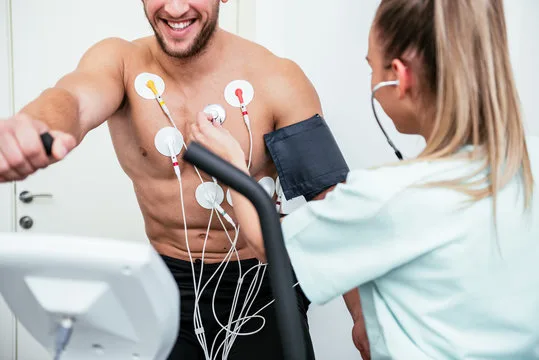
A patient on a treadmill with monitoring electrodes during a cardiac stress test
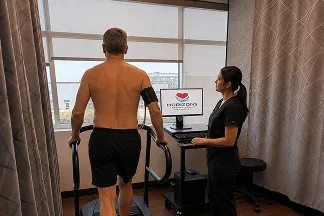
A patient walking on a treadmill during an exercise stress test while a technologist monitors

Exercise Stress Testing

Wear comfortable clothing and proper walking or running shoes. Have only a light meal beforehand and avoid caffeine for several hours, as it can affect the results. Bring a list of your medications, and if you use an inhaler, bring it with you. If you have diabetes, ask us how to manage your food and medication on the day of the test.
More about exercise stress testing

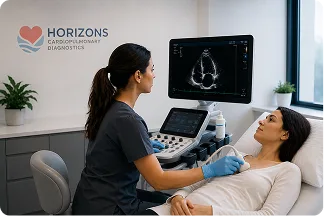
A sonographer performing an echocardiogram, with the heart on screen

Echocardiogram

No special preparation is required. Eat normally and take your medications as usual. Wear comfortable two-piece clothing for your appointment.

More about echocardiogram

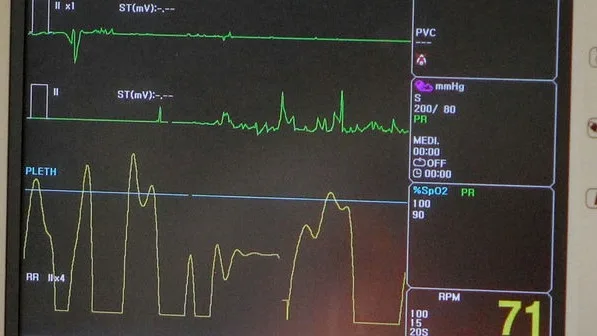
A cardiac monitor displaying ECG traces

ECG

No preparation is needed. It is recommended to avoid applying heavy lotions or creams to your chest on the day of the test.

More about ecg

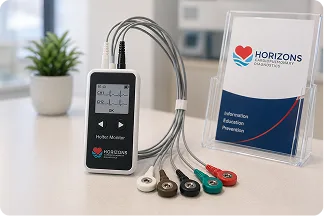
A Holter monitor recorder with its electrode leads

Holter Monitor

Coming soon

Shower before your appointment, as the device cannot get wet while you are wearing it. Wear a loose-fitting two-piece outfit so the small electrodes can be easily connected to the recorder. Continue your usual daily activities and keep a brief diary of any symptoms you experience, noting the time they occur. Return the monitor as instructed so your cardiologist can review the complete recording.

Common cardiac conditions

Plain-language overviews, each with a downloadable handout.

Four handouts

Heart Failure

Understanding your condition and how to manage it: what is happening, the symptoms to watch, and the daily self-care that makes a difference.

Download

Atrial Fibrillation

An irregular heart rhythm: what it means, how stroke risk is lowered, and how the rate or rhythm is controlled.

Download

Aortic Stenosis

Narrowing of the aortic valve: what is happening, the symptoms to watch for, and how it is monitored and treated.

Download

POTS

Postural orthostatic tachycardia syndrome: how it is defined and diagnosed, and the everyday measures that come first.

Download

Read these conditions explained on the site, without downloading anything.

Booking and what to expect

Patients need a physician referral to be seen.

Patients are notified about upcoming appointments by automated text reminders and a personalized phone call to book the appointment.

For a first visit, patients complete an intake survey sent to them by text.

If a patient is unable to complete the survey, they should bring a current medication list to the appointment instead.

Virtual visits are completed either with the physician directly, or with a nurse working under the cardiologist’s guidance, to review new test results, current symptoms, the impact of a new medication change, or to address any urgent concerns.