Patient education

Common Cardiac Conditions

Plain-language overviews of the conditions we see most often, with downloadable handouts you can take home or share with your family.

five conditions · three handouts available

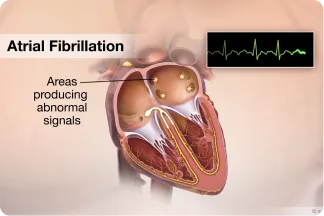
Illustration of the heart showing the upper chambers where atrial fibrillation begins

Atrial Fibrillation

The most common abnormal heart rhythm, in which the heart’s upper chambers quiver instead of beating cleanly, so the pulse becomes irregular and is sometimes fast. Treatment focuses on lowering stroke risk and on controlling the rate or rhythm so you feel better.

Heart Failure

The heart is not pumping as well as it should, either because the muscle has weakened or because it has stiffened and cannot fill properly. It does not mean the heart is about to stop: it is a long-term condition that is managed, and with the right treatment most people feel better and live longer.

A patient holding their chest, one of the ways heart failure is first noticed
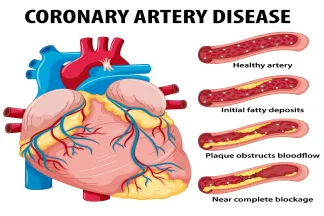
Diagram comparing a healthy artery with arteries progressively narrowed by plaque

Coronary Artery Disease

Fatty deposits called plaque build up over years and gradually narrow the arteries that supply the heart muscle. It can cause chest discomfort, breathlessness or fatigue on exertion (and sometimes less typical symptoms) and is treated with medication, risk-factor changes, and procedures to restore blood flow where needed.

Handout coming soon

Read the full guide

Hypertension (High Blood Pressure)

Blood pressure that stays high makes the heart work harder than it should, and it is the leading risk factor for stroke as well as a major one for heart disease. It usually causes no symptoms at all, which is why it is found by measuring rather than by feel, and it is managed with lifestyle changes and medication where needed.

Handout coming soon

A blood pressure cuff and stethoscope being used to take a reading
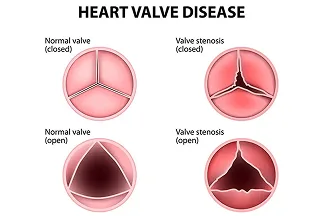
Diagram comparing a normal heart valve with a narrowed one, open and closed

Valve Disease

One of the heart’s four valves stops opening widely or stops closing tightly, so the heart has to work harder to move blood. Aortic stenosis, a narrowed aortic valve, is the most common form we see; it is followed with echocardiograms and, when it becomes severe, treated by replacing the valve.

In depth

Condition guides

Longer explanations for the conditions patients most often arrive here already asking about, written to be read before a first appointment.

Next step

Questions about your diagnosis?

These summaries are general information, not medical advice. Your cardiologist will explain what applies to you.